Shoe racks that hold more than five pairs
OrganizingTesting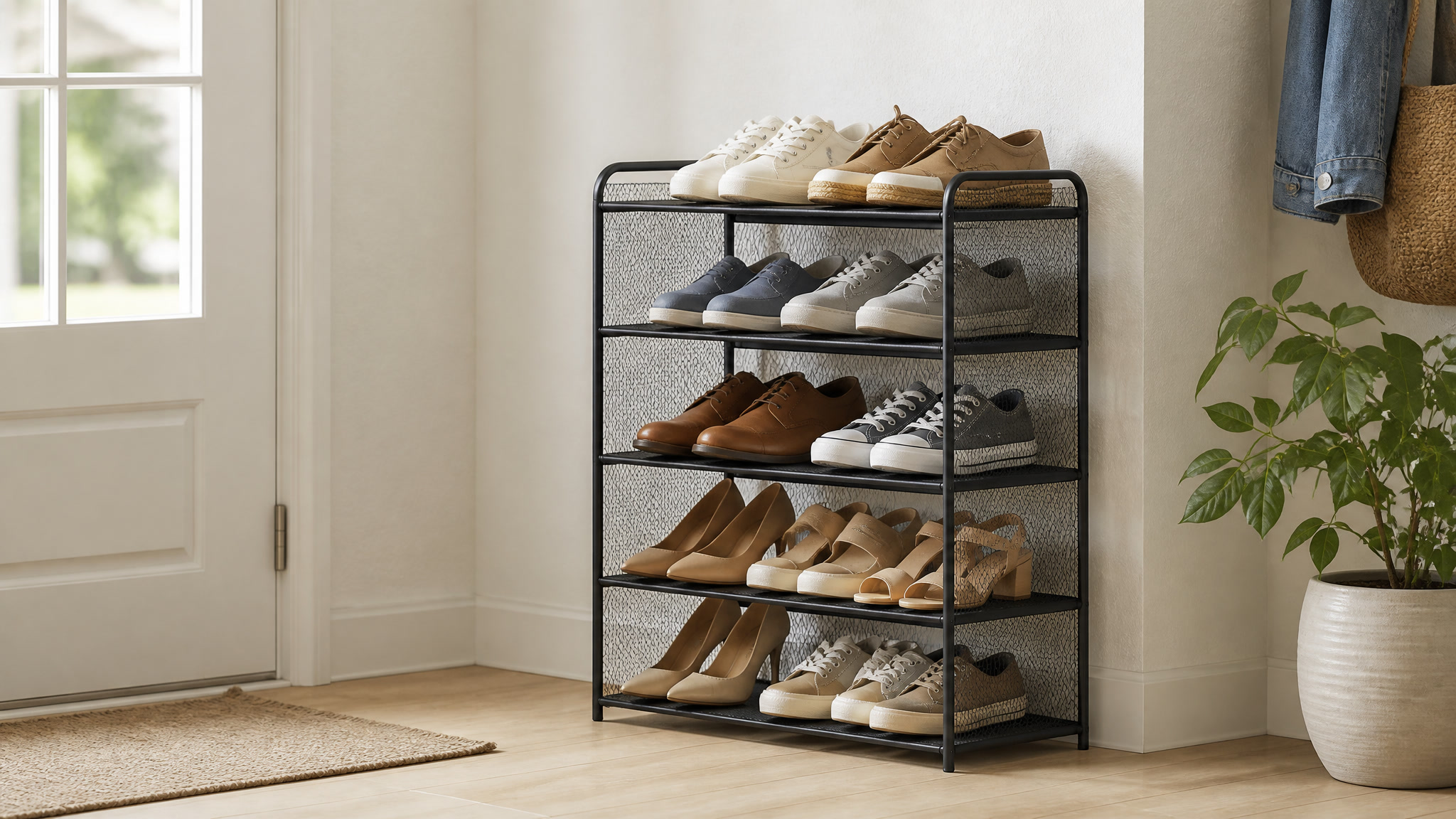
September 21, 2026 · Loaded with boots, sneakers, and heels for two weeks
A shoe rack should be the least dramatic purchase in the house — a few tiers of mesh, a couple of minutes to assemble. But the difference between a good one and a bad one shows up fast: a rack that wobbles under a row of boots, tiers too close together for anything but flats, and a "five-pair" rack that realistically holds three. We loaded several metal-mesh racks with real shoes to see what actually earns its spot by the door.
What actually matters
- Real capacity, not marketing math. A rack advertised as "15–20 pairs" assumes slim flat shoes. Add boots, high-tops, or wide sneakers and the number drops fast. Count tiers, not pairs.
- Tier spacing. If the gap between shelves is too short, only flats fit and boots get forced in sideways. Taller spacing means the rack holds a real mix.
- Frame rigidity. Metal mesh over a solid frame stays planted. Flimsy tubing or loose connectors wobble the moment you load one side heavier than the other.
What we found
- The four-tier metal-mesh rack stayed rock-steady under a full mixed load and fit boots on the bottom tier — the honest winner.
- A five-tier unit with tight spacing held more flat shoes but bent a crossbar under the weight of one heavy boot pair.
- A budget wire rack was cheapest but wobbled and left mesh imprints on the soles after a week.
The verdict
For an entryway or closet that actually holds a mix of shoes, a metal-mesh rack with tall tier spacing and a rigid frame is the one worth buying. Ignore the "pairs" number on the box — count the tiers and measure your tallest pair before you buy.
Products we recommend
VASAGLE 4-Tier Shoe Rack, 15–20 Pairs (Rustic Brown)
Rigid metal-mesh frame with tall tiers that fit boots and sneakers — our pick.
VASAGLE 5-Tier Shoe Rack, 18–24 Pairs
One extra tier for bigger collections; best when you mostly store flats and sneakers.